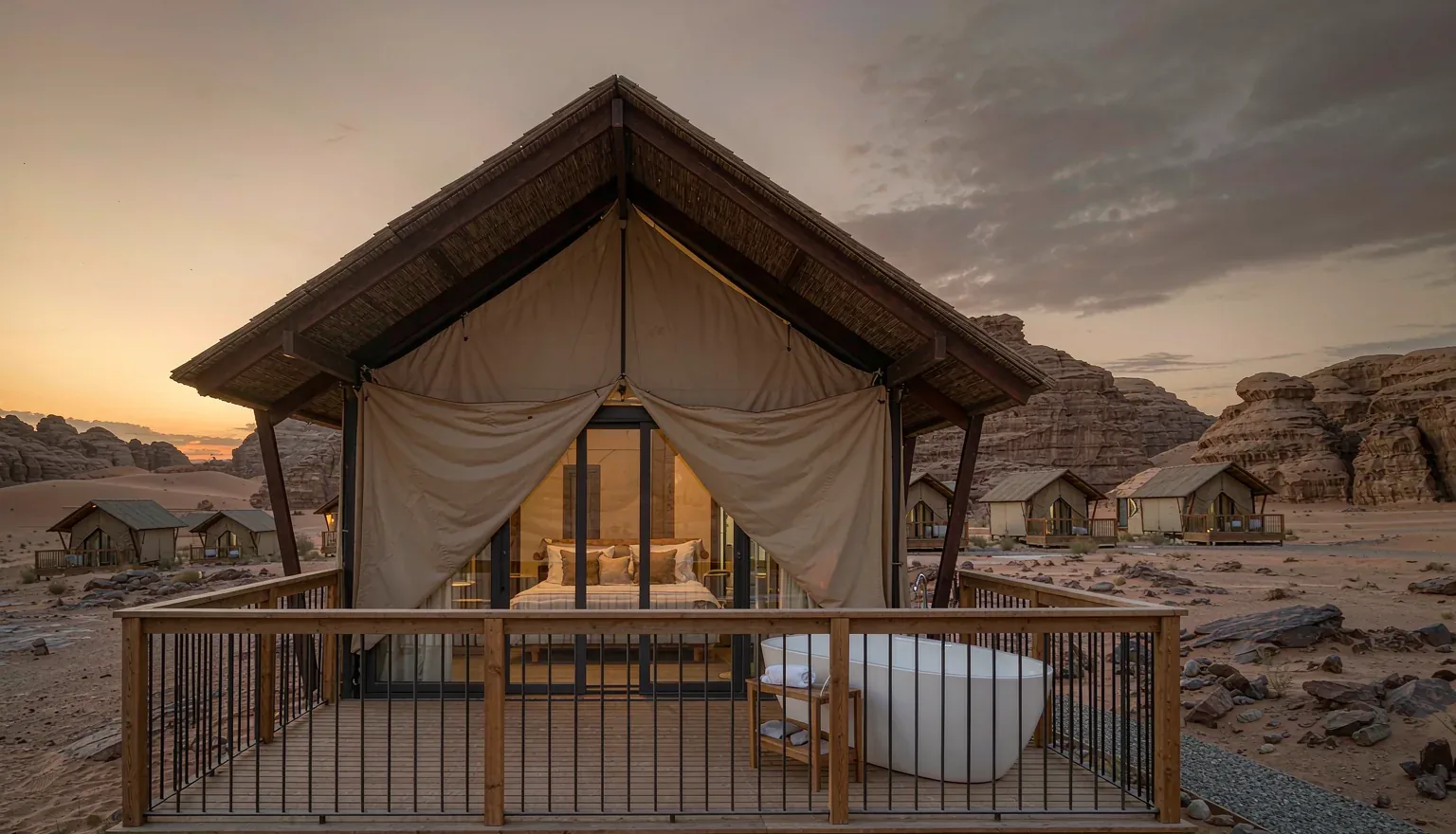
Glamping has moved from trend to asset class. Across the Middle East, Europe and Southeast Asia, well-run cabin resorts consistently achieve daily rates that traditional hotels need decades of brand-building to match — with a fraction of the construction budget. But the gap between a viral idea and a profitable resort is wide. This checklist covers what actually determines success.
1. Site Selection Beats Everything
Guests book the view, not the cabin. Before comparing suppliers, score your land on four factors: a destination view (water, canyon, forest edge or skyline), legal road access for trucks and a crane, within 2–3 hours of your target source market, and a lease long enough to amortize the investment — typically 10+ years or ownership.
2. Define the Unit Mix Early
Profitable camps rarely run a single model. A proven starting mix for a 10–20 unit camp:
- 70% core inventory — mid-premium cabins (e.g. 18–24 m² suites) that carry occupancy year-round.
- 20% signature units — panoramic pods or honeymoon suites priced 30–50% higher, driving social media.
- 10% infrastructure — reception, F&B, laundry and staff modules from the same supplier.
3. Solve Utilities Before You Sign the Order
The three constraints that stall prefab camps are power, water and wastewater. Confirm grid capacity (or plan a solar-battery hybrid), a well or municipal water source, and a septic or treatment solution sized for peak occupancy. Quality prefab suppliers provide load schedules and connection drawings in advance — ask for them before signing.
4. Check Permit Reality, Not Rumours
Prefab cabins are usually classified as temporary or light structures, but rules differ wildly. Prepare structural drawings, load data and material certificates (CE, SGS test reports) for your authority. A supplier who can hand over a complete documentation package will save you months.
5. Budget for the Whole Project
A common mistake is budgeting only for cabins. A realistic budget split for a mid-size camp:
- Cabins incl. furniture & appliances: 55–65%
- Shipping, customs and inland transport: 8–15%
- Foundations, decks and utilities: 15–20%
- Landscaping, signage and soft opening: 5–10%
6. Choose a Supplier Who Delivers the Camp, Not Just the Box
The strongest suppliers act as your construction department: they plan the camp layout, engineer foundations and utility routing, pre-install everything in the factory, handle export documents, and support installation until the first guest arrives. One responsible partner across all of these steps is what turns a 12-month project into a one-season build.
Ready to Run Your Numbers?
Send us your site location and target unit count — we'll return a camp layout, unit mix and budget estimate within 24 hours, free of charge.